TLDR: The bottleneck in tax season is not the tax work — it is chasing clients for documents over email for weeks. A client portal gives each client a single link to upload W-2s, 1099s, bank statements, and signed engagement letters, with automated reminders and progress tracking that can cut average document collection time from 18 days to 7.
Tax season does not have to feel like a hostage situation. But for most accounting firms, January through April is a blur of chasing clients for documents, answering the same questions on repeat, and manually tracking who sent what.
The bottleneck is not the tax work itself. It is getting the information you need to start the tax work. And that is exactly the problem a client portal solves.
The Document Collection Problem
Every accountant knows this scenario. You send a client a list of what you need:
- W-2s and 1099s
- Bank and brokerage statements
- Mortgage interest statements
- Prior year tax return (if they are a new client)
- Estimated tax payment records
- Business expense receipts
- Signed engagement letter
Then you wait. And wait. The W-2 arrives in a text message. The bank statements show up as a 47-page PDF in an email with the subject line “here you go.” The engagement letter never comes back signed. Three follow-up emails later, you are still missing the 1099s.
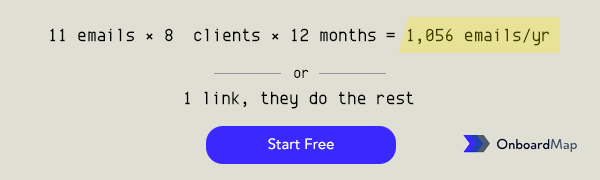
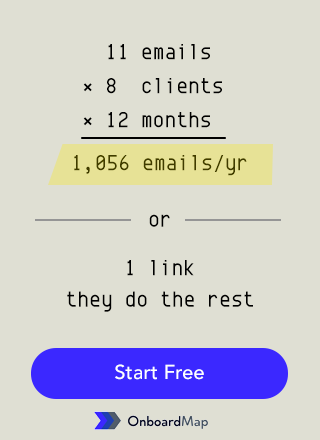
Multiply that by 150 clients and you have a full-time job that has nothing to do with accounting.
How a Client Portal Changes the Workflow
Instead of emailing a checklist, you send each client a single link to their portal. When they open it, they see:
- Clearly labeled upload slots for each document type
- An intake form for basic information (filing status, dependents, major life changes)
- A progress bar showing what they have completed and what is still missing
- Your signed engagement letter ready for e-signature
The client uploads files at their own pace. They can do it from their phone at 10pm on a Tuesday. They do not need to create an account or remember a password. They just click the link and start.
Meanwhile, on your end, you see a dashboard showing the status of every client. Green means ready to go. Yellow means partially complete. Red means they have not started. No spreadsheets. No cross-referencing emails.
For a broader overview of how portals work, read what a client portal is and why it matters.
Real Numbers: Before and After
Here is what a typical five-person accounting firm looks like before and after adopting a client portal:
Before (Email-Based Collection)
- Average time to collect all documents: 18 days
- Follow-up emails per client: 4-6
- Admin hours per week during tax season: 25+
- Client complaints about the process: Frequent
After (Portal-Based Collection)
- Average time to collect all documents: 7 days
- Follow-up emails per client: 0 (automated reminders handle it)
- Admin hours per week during tax season: 8-10
- Client complaints about the process: Rare
That is not hypothetical. Those are the kinds of improvements firms see when they replace email checklists with structured portals.
Building Your Accounting Portal
You do not need to start from scratch. A good portal template for accountants should include these sections:
Section 1: Personal Information
- Filing status
- Dependent information
- Contact details
- Changes from prior year (new home, new job, marriage, new business)
Section 2: Income Documents
- W-2s (upload slot per employer)
- 1099-NEC / 1099-MISC
- 1099-INT / 1099-DIV
- K-1 forms
- Rental income documentation
Section 3: Deduction Documents
- Mortgage interest statement (1098)
- Property tax records
- Charitable donation receipts
- Medical expense records
- Business expense summary
Section 4: Agreements
- Engagement letter (e-signature)
- Authorization to file (e-signature)
Having a pre-built checklist template saves you from rebuilding this every year.
What Clients Actually Think
The fear most accountants have is that clients — especially older ones — will not use a portal. The reality is the opposite.
Clients love portals because:
- They can see what is left. No guessing, no re-reading old emails to figure out what they already sent.
- They do not need to compose an email. Uploading a file is faster than writing “attached please find my W-2.”
- They can do it on their phone. Snap a photo of a document and upload it on the spot.
- Reminders are gentle, not personal. An automated nudge feels less awkward than a “hey, still waiting on those docs” email from their accountant.
The firms that see the highest adoption rates are the ones that keep the portal simple and skip mandatory logins. A magic link in an email is all a client should need.
Beyond Tax Season
A client portal is not just a tax season tool. Bookkeepers use portals year-round for:
- Monthly document collection — bank statements, credit card statements, receipts
- Quarterly estimated tax prep — income summaries and payment confirmations
- New client onboarding — prior year returns, entity documents, access credentials
- Advisory engagements — financial statements, budgets, forecasts
The investment you make in setting up a portal for tax season pays dividends every month after. For a deeper dive into accounting-specific onboarding workflows, check out our guide on client onboarding for bookkeepers and accountants.
Stop Chasing, Start Working
Every hour you spend tracking down a missing W-2 is an hour you could spend on billable work. Every frustrated email exchange is a small crack in your client relationship. The math is simple: automate the collection so you can focus on the accounting.
OnboardMap gives your accounting firm a branded portal where clients submit everything you need through one link. Automated reminders, progress tracking, and organized document collection — built for how accountants actually work. Get early access and make this your last chaotic tax season.